Sagarmatha National Park
Visit the Majesty of Sagarmatha National Park: Nature Environments
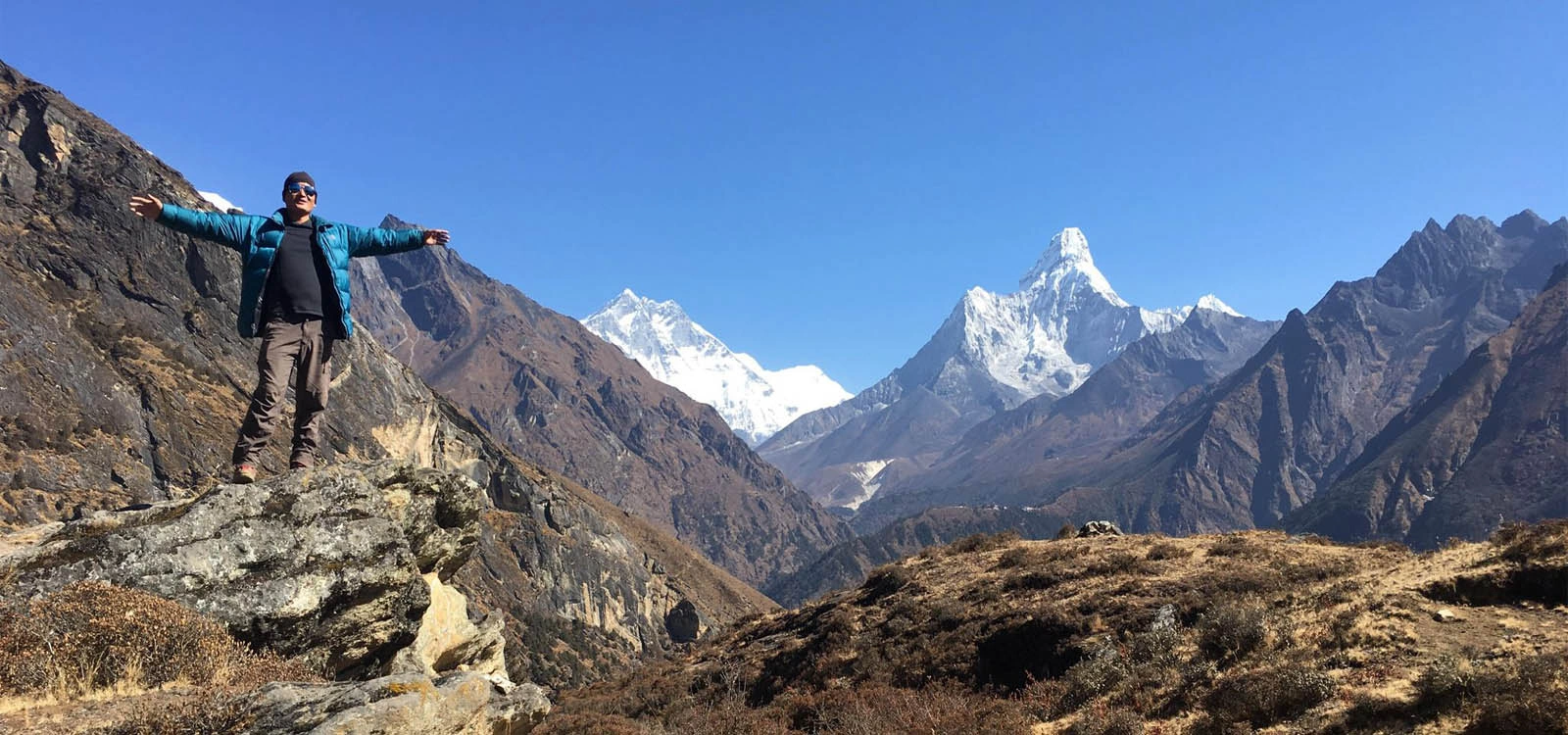
Sagarmatha National Park, one of the souls of the Himalayas, is a territory of beauty and various ecosystems. It was established in 1976 in the northeastern part of Nepal, in Solukhumbu District. It expands from the Dudh Koshi River in the south to the Nepal–Tibet border in the north and covers an area of 1,148 km2 (443Sq mi) in the Solu Khumbu District in eastern Nepal.
Most travelers fly from Kathmandu or Ramechhap to Lukla to reach the Sagarmatha National Park. Some trekkers walk from Phaplu/Jiri to the Khumbu region. However, it takes a long day to go to the Everest Base Camp trek.
History of Sagarmatha National Park:
Sagarmatha National Park was recognized as a UNESCO World Heritage site in 1979. The purpose of establishing the national park was to preserve the natural biodiversity, keep the environmental balance of the region, and preserve the cultural heritage of the local Sherpa communities. The National Park encompasses a diverse range of ecosystems, including the alpine wilderness, landscapes, glacial mass, and deep valleys.
Geographical:
The Sagarmatha National Park includes glacial mass, alpine meadows, deep valleys, and soaring mountains. An elevation ranges from 2800 meters to 8,848 meters at the summit of Mt Everest. This histrionic variant in altitude creates several climatic zones. At lower altitudes, the park has temperate forests. In comparison, the highest mountains experience glacial circumstances. Therefore, the Sagarmatha National Park has a wide range of temperatures. The lower areas have mild weather, while the upper regions are affected by chilly conditions, especially in the winter season.
The Climate at the Sagarmatha National Park is influenced by the Indian summer, with heavy rain from June to August. The best time to trek in the Everest region is autumn and spring. This time will be clear skies and relatively stable weather, offering the magical vistas of the Himalayas.
Flora and Fauna:
The national park offers a wide range of flora and fauna. In the subalpine areas, you will find dense forests of pine, rhododendrons, and junipers. Above an altitude of 4,000 meters, the treeless and lichen-covered areas are, due to the high elevation. Diverse guesses state around one thousand flora species within this national park area.
During the trip, you can also find intangible species such as the Himalayan Thar, black bear, musk deer, snow leopard, mountain Goats, and diverse species of pheasants.
Local Culture of Sherpa People:
Sagarmatha National Park is not only a natural gem, but also a cultural richness, primarily due to the Sherpa community. The Sherpas, well-known for their mountaineering skills, have lived in this region for centuries, adapting to its severe environment and developing a unique culture. Scattered throughout the Sagarmatha National Park are traditional Sherpa villages such as Namche Bazaar, Khumjung, Thame, Pangbuche, and Tengbuche, which offer trekkers a glimpse into their traditional way of life.
Sherpa people grow up acquainting themselves with the countless Himalayas and are known for their mountaineering proficiency. Numerous monasteries serve as sanctuaries for the Sherpas, where ceremonials and religious rituals take place.
The architecture reproduces the unique mixture of Tibetan and Sherpa Charms, including intricately carved wooden facades, prayer flags, and Mani walls. The National Park is scattered with monasteries, Chortens, and prayer flags, shining the mystical linking of the Sherpa with the highlands.
Trekking routes in Sagarmatha National Park:
Sagarmatha National Park has various trekking trail routes, such as the Everest Base Camp Trek, Everest Three Passes Trek, Gokyo Lake Trek, and Everest Base Camp Trek with Gokyo Lake, Everest Panorama View Trek, Tengbuche Monastery Trek, and Ama Dablam Base Camp Trek. However, the Everest Base Camp Trek and the Everest Three Passes Trek are the most popular trekking destinations in the Everest Region.
Everest Base Camp Trek:
The Everest Base Camp trek is one of the best and most popular trekking routes. It offers adventures to get up close to the world’s highest peak, Mount Everest. The trek takes you through eye-catching local Sherpa villages, cultures, and ancient monasteries, and crosses the suspension bridges over the demanding rivers.
Everest Three Passes Trek:
The Three Passes Trek is a challenging trekking route in the Khumbu Region. The Everest Three Passes Trek offers diverse landscapes, the local culture of the Sherpa, waterfalls, and the Rocky Mountains, crossing high-altitude passes like Kongma La, Cho La, and Renjo La.
Entry permits for Sagarmatha National Park:
To visit the wonders of Sagarmatha National Park, trekkers need to obtains two types of permits.
| Trkkers | Permit Cost per person | Below 10 years |
| SAARC | 1500 | free |
| Foreign Nationals | 3,000 | free |
Note: Khumbu Pasang Lhamu Rural Municipality entry permit, you can buy at Lukla, and Sagarmatha National Park permit, you can buy at the Monjo village or the NTB (Nepal Tourism Board office at Kathmandu.
The Sagarmatha National Permit supports conservation efforts and ensures a controlled and sustainable influx of trekkers, preserving the pristine environment.
If you choose to trek in the Sagarmatha National Park with us, we will arrange the permits for you. Therefore, you can take pleasure in your trip to the Everest region.
Book Now
Recent Post
Annapurna Circuit Trek with Ghorepani Poon Hill
30 July, 2026
Annapurna Sanctuary Trek Difficulty
08 July, 2026