Post Date: 08 July, 2026
The Annapurna Sanctuary Trek is also known as the Annapurna Base Camp Trek. It offers trekkers an unforgettable journey through diverse landscapes, local culture, and spectacular views of the Himalayas. This trek leads into the heart of the Annapurna Sanctuary, often described as the paradise of the Annapurna region. The trail involves frequent ascents and descents. Also, This trek is generally rated as moderately challenging.
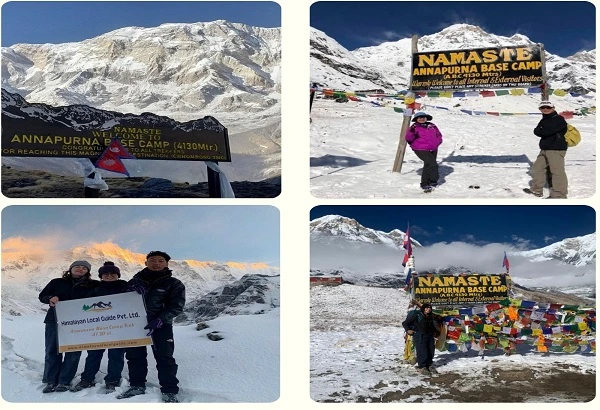
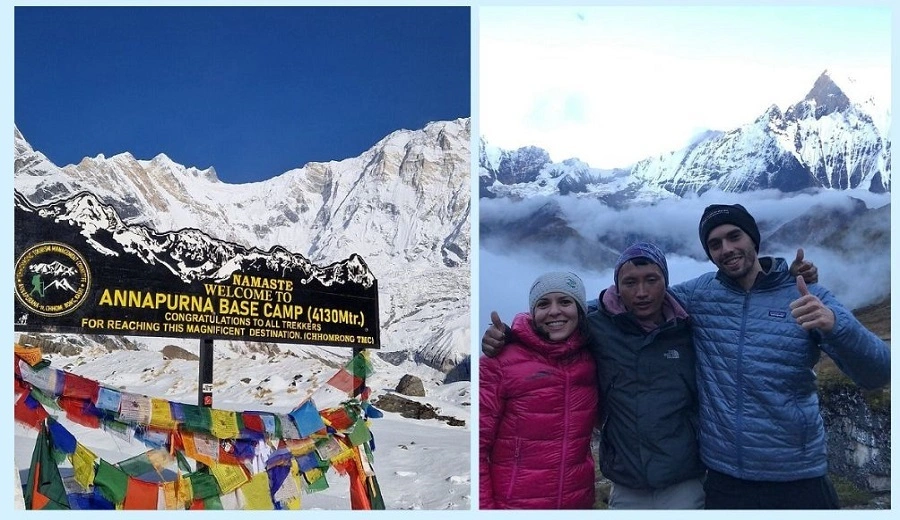
The route begins at Nayapul, reaches the Annapurna Base Camp at 4,130 meters, and before returning via Jhinu Danda. The trek takes 8–11 days. Therefore, The difficulty gradually increases due to challenging terrain and higher altitude. If you are planning the Annapurna Sanctuary Trek, this blog post will help you understand why the trek is moderately challenging.
Trip Facts
- Maximum altitude: 4,130 meters
- Best Season: March–May and September–November
- Trip Route: Nayapul, Ghandruk, Dovan, Machhapuchhre Base Camp (MBC) and Annapurna Base Camp (ABC) or Ghorepani, Tadapani, MBC and ABC
- Daily Walking time: 5-7 hours
- Hardest physical section: Chhomrong to Annapurna Base Camp
Annapurna Sanctuary Trek Difficulty by Itinerary
The Annapurna Sanctuary Trek is short compared to the Everest Base Camp and Annapurna Circuit Trek. But, over eight to eleven days, the trekking trail changes constantly. The first couple of days are relatively easy, following trails that descend to rivers before climbing back uphill. By the second or third day, that comfort disappears. Here is how each section of the Annapurna Sanctuary Trek becomes progressively more challenging.
Nayapul to Ghandruk Village
The trekking trail begins from Nayapul through farmland and crosses several rivers, then ascends to Ghandruk Village. It seems manageable, but the lower altitude is warm, making these sections feel much tougher than expected. The pattern of descending and ascending put steady pressure on your knees. So, the real challenge here is the heat and pacing. If you walk under the midday sun, you will be burning energy fast and feel it later when the trekking trail gets steeper and colder.
Ghandruk to Chhomrong
The trail from Ghandruk to Chhomrong passes through forests, descends to the river, and then climbs steeply to Chhomrong Village, which is located at 2,185 meters on a steep hillside. You can see the beautiful villages and landscapes. By the time you reach Chhomrong, two days of continuous ascending and descending will begin to take a toll on your legs. The Chhomrong village is the last proper resupply point before the Annapurna Sanctuary, so make use of it to rest, organize your trekking gear, and repack your backpack if necessary.
Chhomrong to Deurali
This is where the trek becomes serious and where unprepared trekkers start to struggle. You walk downhill to Modi Khola from Chhomrong Village, then ascend to Sinuwa. This is one of the most physically demanding sections of the trek. After Sinuwa, the trail goes into pine and rhododendron forest. You must be careful when you are walking through the dense forests. The trail may be muddy and slippery. The trek continues toward Bamboo, Dovan, Himalaya, and reaches Deurali; where you stay overnight at a teahouse.
Deurali to ABC (Annapurna Base Camp)
The Trek from Deurali to ABC is the longest and toughest section of the trek. You’ll gain around 900 meters in this single day. From Deurali, the trail moves toward a stretch known for avalanche risk. The valley features steep slopes that get sharper, and the terrain becomes more challenging. It opens into a rocky trails along the river and ascends to MBC and ABC (Annapurna Base Camp).
Annapurna Base Camp to Sinuwa Danda
Annapurna Base Camp to Sinuwa Danda involves a descent of around 1,700 meters, retracing the route through MBC, Deurali, Himalaya, Dovan, Bamboo. Here, the descent is gradual and manageable, but this section often harder on the body than the ascent. After reaching the Annapurna Base Camp, fatigue sets in and focus usually slips. The main demand here is muscle strain. Every step descending forces your legs to control your body, putting heavy stress on your knees and muscles.
You have to be careful on the downhill with the same respect as the uphill. Walk slowly, use trekking poles to decrease impact, and don’t get misled by the lower altitude. If you hurry, your legs will feel like jelly and the final exit day will feel twice as long.
Sinuwa to Jhinu Danda
You descend to Chhomrong, climb briefly, and then descend again to Jhinu Danda. The ascent feels easier on the joints than the descent, but your legs are already tired. The real hard part is mental. You have already reached the ABC. Therefore, your mind wants the trek to be over, but the trekking trail is still one more day. So, it appears moderate, but on the actual trek with tired legs, it feels much more difficult. After you reach the Jhinu Danda, you can take a bath at the natural Hot Spring, which is enjoyable and memorable.
Annapurna Sanctuary Trek Itinerary
Day 01: Kathmandu to Pokhara
Day 02: Pokhara – Nayapul – Ghandruk
Day 03: Ghandruk – Chhomrong Village
Day 04: Chhomrong – Himalaya or Deurali
Day 05: Himalaya – MBC – ABC
Day 06: ABC – Sinuwa Danda
Day 07: Sinuwa Danda – Jhinu Danda
Day 08: Drive back to Pokhara
Main Attractions of the Annapurna Sanctuary Trek
- ABC – Offers magical panoramic views of Mt Dhaulagiri, Annapurna I and surrounding peaks.
- Machhapuchhare (Fishtail) – beautiful peak in the Annapurna region.
- Ghandruk Village – Typical village of Gurung, which offers stunning local culture and customs.
- Rhododendron forest – Vibrant blooms in the spring season along the trekking route.
- Natural Hot Spring – Beautiful hot spring at Jhinu Danda.
- Wildlife – Musk deer, Himalayan tahars, langurs, monals, and other species.
- Culture – Experience both Hindu and Buddhist traditions.
Cultural Experience
The Annapurna Sanctuary trek is not only a trip through spectacular landscapes but also a deep local cultural immersion into the traditional lifestyles of Nepal’s Himalayan communities. As you trek through the gorgeous Annapurna Region, you will encounter the rich combination of ethnic cultures and warm hospitality that make this trek truly special.
Festivals & lifestyle
Throughout the Annapurna region, culture is deeply rooted in daily life. If you travel during the festival seasons, you may witness the vibrant celebrations such as Dashain, Tihar, and Chhath Puja filled with music, dance, and rituals. Along the journey, you will encounter the prayer flags, mani walls, and monasteries. Most of the mountain communities are influenced by both Hinduism and Buddhism.
Flora & Fauna
The Annapurna region is home to a rich variety of flora & fauna ranging from lush subtropical forests at lower elevations to alpine meadows near the base camp. Trekkers can enjoy forests of rhododendron, oak, and pine trees, with colorful rhododendron blooms adding vibrant shades to the landscapes in the spring season.
Personal Expenses
While planning the Annapurna Sanctuary trek, most of the services are included in the package, but some extra personal items are not included in the package trip. Therefore, you should budget for these during the trek.
- Hot Showers: USD 3 – 5 per use at high elevation.
- Battery Charging: USD 2 – 5 per device (Mobile or Camera battery charging).
- Internet services (Wi-Fi): USD 3 – 5 per day.
- Beverages: Cup of Tea, Coffee (USD 2 – 4).
1. Where is the Annapurna Sanctuary located?
The Annapurna Sanctuary is located in the ACAP (Annapurna Conservation Area, north-west of the Pokhara valley. The Trek begins at Nayapul or Dhampus Phedi.
2. What is the difficulty level of the Annapurna Sanctuary trekking?
The Annapurna Sanctuary trek is classified as a moderate difficulty trek but easier compared to the Everest Base Camp and Annapurna Circuit.
3. How long does the Annapurna Sanctuary Trek take?
It depends on your itinerary; It takes a minimum of around 8 to 11 days to complete the Annapurna Sanctuary trek.
4. Are there internet and mobile networks available on this trek?
There is internet and mobile network coverage in the Annapurna Sanctuary trek in most of the teahouses. We highly recommend using an NTC SIM card if you are planning to purchase a local mobile SIM Card.
5. Is a guide and porter necessary for the Annapurna Sanctuary Trek?
Hiring a licensed guide is mandatory, while hiring a porter is optional for the Annapurna Sanctuary trek. However, hiring a porter is highly recommended as it makes the trek easier by allowing you to carry only a daypack with necessary items; while the porter carries your main luggage.
Conclusion
The Annapurna Sanctuary Trek is more than just a trip hrough the Himalayan region. It’s an experience that combines spectacular natural beauty, vibrant culture, and personal achievement. You will encounter the lush rhododendron forests, waterfalls, rocky Mountains, and majestic peaks of Annapurna and Machhapuchhare. Every step of the trek creates unforgettable memories..
Along the journey, you’ll interact with friendly local communities, witness the traditional Gurung and Magar culture, and explore the typical villages. The trek also requires a good a good level of physical fitness and mental determination making the achievement even more rewarding once you reach the base camp.
With expert guides, well-planned itineraries, and full support from Himalayan Local Guide Pvt. Ltd, you can focus on enjoying the trip while staying safe and comfortable.
Recent Post
Annapurna Circuit Trek with Ghorepani Poon Hill
30 July, 2026
Kyanjin Ri Viewpoint
18 June, 2026